330 Gallon IBC Tote
Twenty percent more capacity on the same pallet footprint. The 330-gallon IBC tote is the high-volume workhorse for operations that need maximum storage density and fewer container changes.
Get a Free Quote
We respond within 24 hours
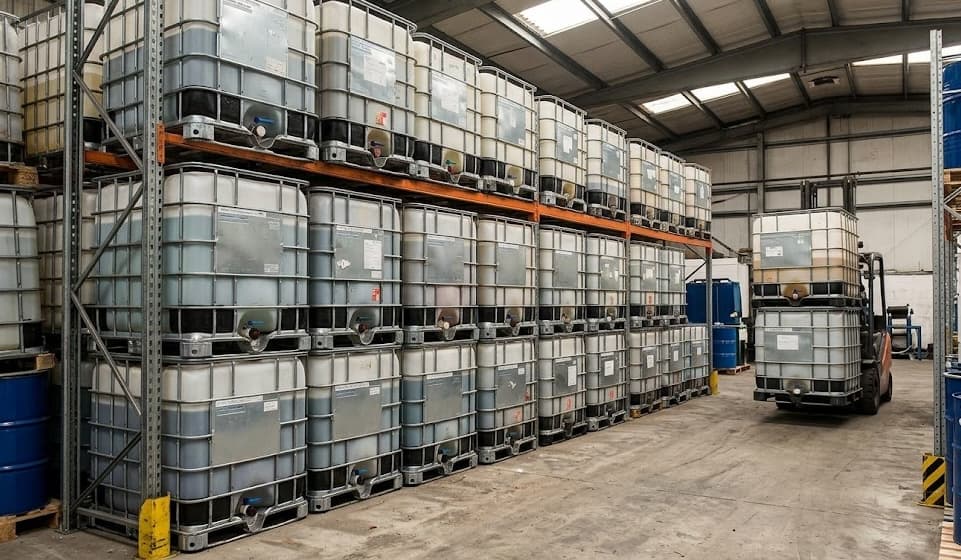
330 Gallon IBC Tote — Maximum Capacity
Full Specifications
The 330-gallon IBC tote uses the same fundamental design as the 275-gallon model but with a taller bottle, heavier cage wire, and thicker bottle walls to handle the additional weight and hydrostatic pressure. All dimensions below apply to the most common configuration from manufacturers including Schutz, Mauser, Greif, and Snyder Industries.
Dimensional Drawing Reference
Every critical measurement for the 330-gallon IBC tote in both imperial and metric units. The key difference from the 275-gallon model is the 53-inch overall height (vs 46 inches) driven by a 43-inch internal bottle height (vs 36 inches). All other footprint and fork dimensions are identical.
| Dimension | Inches | Millimeters |
|---|---|---|
| Overall Length (L) | 48.0 | 1,219 |
| Overall Width (W) | 40.0 | 1,016 |
| Overall Height (H) | 53.0 | 1,346 |
| Bottle Inside Length | 45.5 | 1,156 |
| Bottle Inside Width | 37.5 | 953 |
| Bottle Inside Height | 43.0 | 1,092 |
| Pallet Length | 48.0 | 1,219 |
| Pallet Width | 40.0 | 1,016 |
| Pallet Height | 5.5 | 140 |
| Fill Opening Diameter | 6.0 | 150 |
| Valve Outlet (NPS) | 2.0 | 50 |
| Cage Wire Spacing (H) | 3.0 | 76 |
| Cage Wire Spacing (V) | 5.0 | 127 |
| Fork Pocket Width | 7.5 | 191 |
| Fork Pocket Height | 3.5 | 89 |
| Center-to-Center Fork Spacing | 27.0 | 686 |
Filled Weight by Liquid Type
The 330-gallon tote holds 20% more liquid than the 275-gallon, which means filled weights are proportionally higher. This table is critical for determining forklift capacity (most standard forklifts are rated at 5,000 lbs), floor loading, and truck weight compliance. All weights include the ~145 lb empty tote.
| Liquid | Specific Gravity | lbs / gal | Filled (lbs) | Filled (kg) |
|---|---|---|---|---|
| Water | 1.00 | 8.34 | 2,897 | 1,314 |
| Diesel Fuel | 0.85 | 7.09 | 2,485 | 1,127 |
| Gasoline | 0.74 | 6.17 | 2,181 | 989 |
| Motor Oil (SAE 30) | 0.89 | 7.42 | 2,594 | 1,176 |
| Vegetable Oil | 0.92 | 7.67 | 2,676 | 1,214 |
| Glycerin | 1.26 | 10.51 | 3,613 | 1,639 |
| Sulfuric Acid (98%) | 1.84 | 15.35 | 5,211 | 2,363 |
| Hydrochloric Acid (37%) | 1.19 | 9.92 | 3,419 | 1,551 |
| Sodium Hydroxide (50%) | 1.52 | 12.68 | 4,329 | 1,963 |
| Ethanol | 0.79 | 6.59 | 2,320 | 1,052 |
| Isopropyl Alcohol | 0.79 | 6.59 | 2,320 | 1,052 |
| Antifreeze (Ethylene Glycol) | 1.11 | 9.26 | 3,201 | 1,452 |
HDPE Material Properties
The 330-gallon bottle uses the same HDPE resin as the 275-gallon model but with thicker walls (2.5 to 3.5 mm vs 2.0 to 3.0 mm) to handle the higher hydrostatic pressure from the taller liquid column. The thicker walls add approximately 5 to 8 lbs to the bottle weight and improve impact resistance.
Steel Cage Specifications
The 330-gallon cage uses heavier-gauge wire (4.5 to 5.5 mm vs 4.0 to 5.0 mm on the 275-gal model) and includes two additional horizontal wire rows to support the taller bottle. This results in a cage that weighs approximately 52 lbs compared to 42 lbs for the 275-gal version. The additional material is necessary to handle the higher hydrostatic force that the taller liquid column exerts on the cage walls.
At the base of a filled 330-gallon tote, the HDPE bottle experiences approximately 1.9 psi of hydrostatic pressure (53 inches of water head). Without the steel cage constraining the bottle, this pressure would cause the bottle walls to bulge outward by several inches, eventually leading to stress cracking and failure. The cage distributes this force evenly across the grid and transfers vertical loads through the corner posts to the pallet.
Pallet Options
Because the 330-gallon tote carries significantly more weight when filled (up to 5,370 lbs at SG 1.9), pallet selection is more critical than with the 275-gallon model. Steel pallets are strongly recommended for heavy-liquid applications where the filled weight exceeds 4,000 lbs.
| Pallet Type | Weight | Load Capacity | Entry | Notes |
|---|---|---|---|---|
| Hardwood (Oak/Maple) | ~36 lbs (16 kg) | 5,500 lbs (2,495 kg) | 4-way | Most common; ISPM-15 heat-treated for export |
| Treated Pine | ~30 lbs (14 kg) | 4,500 lbs (2,041 kg) | 4-way | Lighter and lower cost; adequate for domestic use |
| Steel | ~45 lbs (20 kg) | 8,000 lbs (3,629 kg) | 4-way | Longest lifespan; no rot or pest issues; heaviest |
| HDPE Composite | ~28 lbs (13 kg) | 5,000 lbs (2,268 kg) | 4-way | Wash-down compatible; FDA-friendly; most expensive |
2" Butterfly Valve Specifications
The 330-gallon IBC uses the same 2-inch butterfly valve as the 275-gallon model. However, the taller liquid column (53 inches vs 46 inches of head) produces slightly higher pressure at the valve, resulting in marginally higher initial flow rates and faster drainage at the start of dispensing.
Under gravity discharge from a full 330-gallon tote, the valve delivers approximately 27 GPM initially, tapering to 15 GPM as the liquid level drops. A complete drain takes 20 to 25 minutes through a standard butterfly valve. For faster emptying or precision dispensing, consider upgrading to a 2-inch ball valve or installing a positive-displacement pump.
The valve is the most commonly replaced component on any IBC tote. We stock replacement butterfly valves for all major manufacturers and can ship same-day from our Elk Grove Village warehouse.
UN Marking Decoder
Every UN-certified 330-gallon IBC tote carries a marking that encodes its certification details. The marking format is identical to the 275-gallon model. Note that 330-gallon totes may have a lower maximum specific gravity rating (1.5 instead of 1.9) depending on the manufacturer, because the higher volume at the same SG produces a heavier gross weight that may exceed the cage and pallet structural limits.
15 Common Compatible Chemicals
Chemical compatibility for the 330-gallon tote is identical to the 275-gallon model since both use the same HDPE resin. The important difference is weight: at higher specific gravities, the 330-gallon tote produces significantly heavier filled weights. Verify that your forklift, racking, and floor can handle the load before filling with dense chemicals.
| Chemical | Resistance | Notes |
|---|---|---|
| Acetic Acid (up to 50%) | Excellent | No swelling, no degradation at ambient temp |
| Sodium Hypochlorite (Bleach, 12.5%) | Good | Oxidizer - replace gaskets regularly; avoid prolonged UV |
| Phosphoric Acid (up to 85%) | Excellent | Standard for food-grade cleaning solutions |
| Sulfuric Acid (up to 70%) | Excellent | Use Viton gasket above 50% concentration |
| Hydrochloric Acid (up to 37%) | Good | Fuming above 30% - ensure vented cap |
| Sodium Hydroxide (up to 50%) | Excellent | No effect on HDPE even at elevated temp |
| Potassium Hydroxide (up to 45%) | Excellent | Common in soap/detergent manufacturing |
| Isopropyl Alcohol (100%) | Good | Minor swelling at elevated temps; OK at ambient |
| Ethanol (up to 95%) | Good | Use PTFE gasket for highest purity applications |
| Hydrogen Peroxide (up to 35%) | Good | Oxidizer - vented cap mandatory; Viton gasket |
| Citric Acid (saturated) | Excellent | Common food additive and cleaning agent |
| Urea Solution (DEF / AdBlue) | Excellent | 32.5% urea - must be food-grade tote |
| Glycerin / Glycerol | Excellent | High SG (1.26) - verify UN max gross weight |
| Liquid Fertilizer (10-34-0) | Excellent | Phosphoric acid base; standard ag use |
| Windshield Washer Fluid | Excellent | Methanol-based; low SG; no issues |
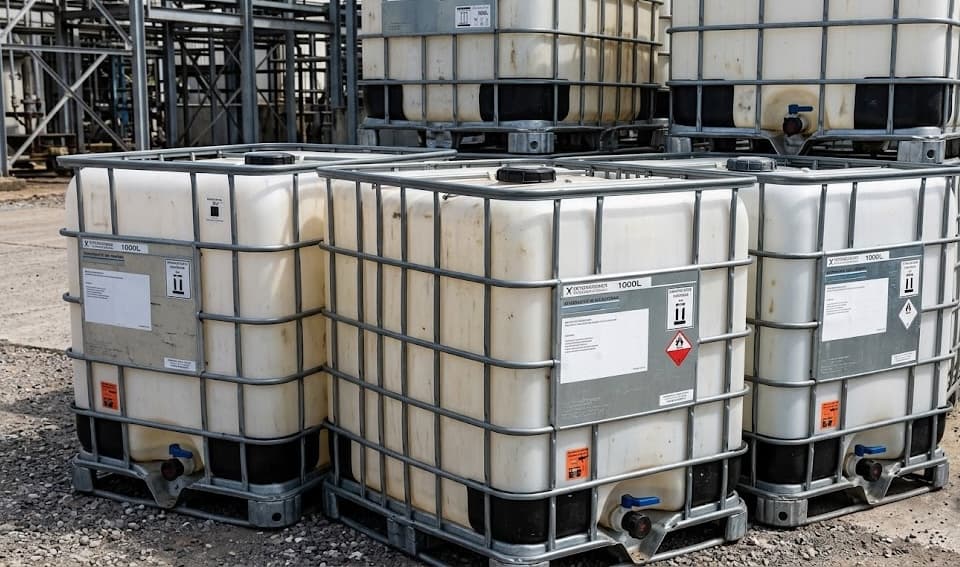
20% More Capacity, Same Footprint
The 330-gallon IBC tote delivers 55 additional gallons of capacity compared to the standard 275-gallon model while occupying the exact same 48 x 40 inch pallet footprint. The extra volume comes from 7 additional inches of height, supported by heavier-gauge cage wire and thicker bottle walls.
For operations that can accommodate the extra height and weight, the 330-gallon tote reduces cost per gallon, cuts changeover frequency, and improves freight efficiency by carrying more product per pallet position.
When to Choose 330 Over 275
The 330-gallon tote is not universally better than the 275-gallon model. It excels in specific scenarios where the extra capacity outweighs the tradeoffs in weight, height, and handling. Below is a detailed guide to help you decide which size is right for your operation.
Higher Volume, Same Floor Space
The 330-gallon IBC shares the exact same 48" x 40" pallet footprint as the 275-gallon model, but it delivers 20% more capacity by adding seven inches of height. If your facility is limited on floor space but has overhead clearance, the 330-gallon tote lets you store more product per square foot without expanding your footprint. For a warehouse with 100 pallet positions dedicated to IBC storage, switching from 275-gal to 330-gal adds 5,500 gallons of capacity without using a single additional square foot.
Fewer Containers to Manage
For a given volume of product, 330-gallon totes reduce the total number of containers you need by roughly 17%. That means fewer units to receive, fewer valves to inspect, fewer pallets to track, and fewer empties to return. Over a year, a facility consuming 100,000 gallons of a liquid product would need 364 fills of 275-gallon totes versus only 303 fills of 330-gallon totes, saving 61 handling cycles. At an estimated labor cost of $15 per container changeover (disconnect, remove, position new tote, connect), that is $915 in annual labor savings on changeovers alone.
Lower Cost per Gallon
The price difference between a 275-gallon and 330-gallon tote of the same grade is typically 10 to 15%, but you gain 20% more volume. That translates to a 5 to 10% reduction in your cost per gallon of container capacity. For operations buying dozens or hundreds of totes per year, the savings add up quickly. Example: if a Grade B 275-gal tote costs $120 ($0.436/gal) and a Grade B 330-gal tote costs $135 ($0.409/gal), you save $0.027 per gallon of capacity, which over 100 totes equals $891.
Process Tank Replacement
Facilities that use 300 to 350 gallon batches often find the 330-gallon IBC to be a drop-in replacement for rigid process tanks, mixing vessels, and day tanks. The IBC format adds the benefits of portability, stackability, and disposability that fixed tanks cannot offer. Unlike a welded stainless-steel process tank that costs $3,000 to $8,000, a recycled 330-gal IBC costs a fraction of that while still providing chemical resistance, a built-in valve, and a forklift-ready pallet.
Reduced Freight Cost per Gallon
If you are shipping filled IBC totes by truck, the taller 330-gallon model delivers more product per pallet position. A standard 53-foot trailer can hold 20 pallets of single-stacked IBCs. That is 6,600 gallons per load with 330-gallon totes compared to 5,500 gallons with 275-gallon totes, a 20% improvement in freight efficiency. At average truckload freight rates of $2.50 per mile for a 500-mile haul ($1,250), the per-gallon freight cost drops from $0.227 to $0.189, saving $0.038 per gallon.
Seasonal Surge Storage
Agricultural operations, food processors, and beverage companies experience seasonal peaks where storage demand spikes. The 330-gallon tote provides 20% more buffer capacity per unit during harvest, production runs, or promotional periods. When the season ends, the totes can be returned, resold, or stacked empty to free up warehouse space.
Dedicated Feed-Line Supply
Automated production lines with dedicated IBC docking stations benefit from the longer run time between tote changes. A 330-gallon tote feeding a process at 5 GPM runs for 66 minutes versus 55 minutes for a 275-gallon tote. That extra 11 minutes per changeover reduces downtime by 17% and can mean one fewer tote change per shift in high-throughput environments.
Storage Guidelines
The 330-gallon tote requires extra attention to storage conditions because of its greater height and weight. The 53-inch height creates a higher center of gravity, and the nearly 2,900 lb filled weight demands more from floors, pallets, and handling equipment.
Indoor Storage Temperature
50 F to 100 F (10 C to 38 C) for longest bottle life
Outdoor UV Protection
Cover with UV-resistant tarp or tote cover; HDPE degrades in direct sunlight within 12-18 months
Surface / Foundation
Level concrete or compacted gravel; avoid soft ground that allows tilting; 330-gal totes are top-heavy
Stacking (Filled)
Maximum 2 high per UN/DOT; lower tote must have intact cage and pallet; total stacked height is 106 in
Stacking (Empty)
Maximum 4 high when nested; secure with straps to prevent shifting
Clearance from Heat Sources
Minimum 36 inches from furnaces, boilers, steam lines, or radiant heaters
Fire Separation
Follow NFPA 30 for flammable liquids; 20 ft from buildings or fire-rated enclosure
Spill Containment
Required for hazardous materials per EPA 40 CFR 264.175; 110% of largest container volume (363 gal sump for 330 gal tote)
Height Clearance Check
330-gal totes at 53 in will NOT double-stack in standard 102 in trailers; verify racking beam spacing is 54 in+
Shelf Life of HDPE Bottle
5 years from manufacture date per most UN certifications; rebottle after expiration
Stacking Load Tables
While 330-gallon totes can technically be stacked two high when filled per UN/DOT guidelines, the practical reality is more nuanced. Two stacked 330-gallon totes reach 106 inches, which exceeds the 102-inch interior height of most standard dry van trailers. For warehouse storage, verify your floor can handle the concentrated load.
| Configuration | Total Weight | Bottom Pallet Load | Notes |
|---|---|---|---|
| Single tote (filled with water) | 2,897 lbs | 2,897 lbs | Exceeds most pallet jack capacity; forklift required |
| 2-high stack (both filled, water) | 5,794 lbs | 5,794 lbs | Stacked height 106 in - does NOT fit in 102 in trailer |
| Single tote (SG 1.5 liquid) | 4,263 lbs | 4,263 lbs | Heavy load; verify floor load rating |
| 2-high stack (SG 1.5 liquid) | 8,526 lbs | 8,526 lbs | Near cage structural limit; consult manufacturer |
| Single tote (SG 1.9 liquid) | 5,370 lbs | 5,370 lbs | Maximum UN-rated SG; heavy-duty forklift required |
| 2-high stack (SG 1.9 liquid) | 10,740 lbs | 10,740 lbs | Exceeds most cage ratings; NOT recommended |
Maintenance Tips for 330-Gallon Totes
Maintenance requirements for the 330-gallon tote are similar to the 275-gallon model but with extra emphasis on weight-related stress points. The heavier load accelerates wear on gaskets, pallets, and cage welds.
Valve
Operate the butterfly valve through a full open-close cycle monthly to prevent the disc from seizing. The higher hydrostatic pressure in a 330-gal tote creates more force on the disc seal than a 275-gal tote, so gaskets wear faster. Replace the EPDM gasket every 12 months or immediately if dripping.
Lid / Fill Cap
Inspect the lid gasket for cracks or compression set every 6 months. Taller 330-gal bottles generate more internal pressure fluctuation with temperature changes. Replace vented caps if the vent membrane is clogged or torn.
HDPE Bottle
Check for hairline cracks, especially at the corners and around the valve boss. The taller bottle wall on 330-gal totes is subject to more hydrostatic stress at the base. UV-damaged bottles become chalky white and brittle.
Steel Cage
The heavier 4.5-5.5 mm wire on 330-gal cages is more robust than the 275-gal cage but also carries more weight. Inspect welds at the top frame and corner verticals. Check for buckling at the bottom where cage meets pallet under heavy loads.
Pallet
Wood pallets under filled 330-gal totes bear nearly 2,900 lbs. Check for split boards, protruding nails, and rot more frequently than you would for 275-gal totes. Consider upgrading to steel pallets for long-term heavy-load service.
Labels & Markings
Remove old labels before refilling. Residual labels can obscure UN markings and lead to compliance issues during DOT inspections. Use a heat gun and plastic scraper.
Cleaning
Triple-rinse with the final product or compatible solvent. The taller 330-gal bottle requires longer rinse times to ensure full coverage of internal surfaces. For food-grade: hot (160 F) potable water with CIP detergent followed by sanitizing rinse.
Weight Monitoring
A filled 330-gal tote with water weighs nearly 2,900 lbs. Monitor floor loading in multi-story buildings. Two stacked totes at 5,794 lbs concentrated on a 13.3 sq ft footprint equals 436 PSF - verify your floor can handle this.
Available Grades
We stock 330-gallon IBC totes in the same condition grades as our 275-gallon inventory. Every tote is inspected and graded at our Elk Grove Village facility.
Rebottled
- New HDPE bottle in reconditioned cage
- Food-grade ready
- Pressure-tested
- No prior product contact in bottle
- Ideal for pharmaceutical and cosmetic use
Grade A
- One-trip or lightly used
- Clean, no staining
- Cage and pallet excellent
- Food-grade eligible with documentation
- Premium appearance
Grade B
- Light cosmetic wear
- Fully functional valve
- May have label residue
- Perfect for industrial chemicals
- Best price-to-condition ratio
Grade C
- Visible cosmetic wear
- Structurally sound
- Valve may need replacement
- Suitable for non-sensitive storage
- Lowest price point
Common Applications
The 330-gallon IBC tote serves the same broad market as the 275-gallon model but is especially favored in high-throughput and bulk-storage scenarios where the extra volume reduces costs.
High-Volume Manufacturing
Production facilities that consume large quantities of a single liquid benefit from the reduced changeover frequency of 330-gallon totes. Automotive paint lines, beverage syrup systems, and chemical blending operations are common users. The extra 55 gallons per tote can mean one fewer changeover per shift on high-throughput lines.
Bulk Chemical Distribution
Chemical distributors and blenders use 330-gallon totes to maximize the value of each filled container. When selling product by the tote, the 330-gallon size commands a premium and delivers better margin per unit shipped. Distributors also benefit from reduced packaging waste and fewer containers to manage in their return logistics.
Agricultural Operations
Large farms and commercial greenhouses that need high volumes of liquid fertilizer, pesticide concentrate, or irrigation water during growing season prefer the 330-gallon size to reduce refill trips and field downtime. A single 330-gal tote on a trailer provides enough liquid fertilizer for approximately 15-20 acres of row crops.
Water Treatment & Storage
Municipal water treatment plants, cooling tower systems, and boiler feed water operations use 330-gallon totes for treatment chemicals like sodium hypochlorite, polymer flocculants, and pH adjusters. The higher volume reduces the frequency of chemical deliveries and changeovers in critical treatment processes.
Food & Beverage Bulk Storage
Wineries, breweries, juice processors, and cooking oil manufacturers use food-grade 330-gallon totes for raw ingredient receiving and finished product staging. The extra capacity is especially valuable during harvest and peak production seasons when storage space is at a premium.
Waste Collection & Recycling
Waste haulers and recycling processors use 330-gallon totes to collect used cooking oil, spent solvents, antifreeze, and other recoverable liquids. The larger capacity means fewer pickups and lower transportation costs. A single 330-gal tote holds enough used cooking oil from a restaurant to last 3-4 months between collections.
330 Gallon vs 275 Gallon: Every Specification
This comprehensive comparison covers every measurable difference between the two standard IBC tote sizes. Use it to make a data-driven decision for your specific application.
| Specification | 275 Gallon | 330 Gallon |
|---|---|---|
| Nominal Volume | 275 gal (1,041 L) | 330 gal (1,249 L) |
| Overflow Capacity | ~284 gal (1,075 L) | ~340 gal (1,287 L) |
| Length | 48 in | 48 in |
| Width | 40 in | 40 in |
| Height | 46 in | 53 in |
| Height Difference | Baseline | +7 in taller |
| Empty Weight | ~118 lbs | ~145 lbs |
| Filled Weight (Water) | ~2,410 lbs | ~2,890 lbs |
| Bottle Wall Thickness | 2.0 - 3.0 mm | 2.5 - 3.5 mm |
| Cage Wire Diameter | 4.0 - 5.0 mm | 4.5 - 5.5 mm |
| Capacity Gain | Baseline | +20% (55 gal more) |
| 2-High in Trailer (102" interior) | Yes (92" stacked) | No (106" stacked) |
| Pallet Jack Friendly (filled) | Yes (under 2,500 lbs) | No (exceeds 2,500 lbs) |
| Cost per Gallon of Capacity | Higher | 5 - 10% Lower |
| Drain Time (gravity, 2" valve) | ~15 - 20 min | ~20 - 25 min |
| Standard Racking Fit (48" beam) | Yes | No - requires 54"+ beam |
| Gallons per Truckload (20 pallets) | 5,500 gal | 6,600 gal |
Before You Buy 330 Gallon Totes
While the 330-gallon IBC offers clear advantages in capacity and cost-per-gallon, there are practical considerations to evaluate before committing to the larger size.
Weight
A filled 330-gallon tote weighs approximately 2,890 lbs, which exceeds the capacity of most manual pallet jacks (typically rated to 2,500 lbs). You will need a forklift or powered pallet jack to move filled 330-gallon totes. Ensure your forklift is rated for at least 3,000 lbs at the required lift height.
Height Clearance
At 53 inches tall, the 330-gallon tote will not double-stack in a standard 102-inch trailer. Two stacked totes reach 106 inches. If your logistics depend on two-high stacking during transport, the 275-gallon model is the only option.
Racking Compatibility
Verify that your existing pallet racking beam heights can accommodate the extra 7 inches. Standard 48-inch beam spacing will not fit a 53-inch tote. You will need beam heights of at least 54 inches, ideally 56 inches for safe clearance.
Drain Time
Through a standard 2-inch butterfly valve under gravity, a 330-gallon tote takes approximately 20 to 25 minutes to drain completely, versus 15 to 20 minutes for a 275-gallon tote. If drain time is a process bottleneck, upgrade to a ball valve or pump-assisted discharge.
Floor Loading
Two stacked 330-gallon totes filled with water create a concentrated load of 436 PSF (5,794 lbs on 13.3 sq ft). This exceeds the live load rating of many second-floor commercial buildings (typically 125-250 PSF). Always verify structural capacity before storing heavy IBCs above ground level.
Ordering Information
Request a Quote
Call (773) 800-2280 or submit a request through our contact form. Specify quantity, grade, pallet type, and any special requirements.
Review & Confirm
We send pricing within 2 hours during business hours. Volume discounts applied automatically for 10+ units.
Pickup or Delivery
Free pickup at 2645 American Ln, Elk Grove Village, IL 60007. Local delivery and nationwide shipping available.
Volume Pricing Tiers
Ready to Order 330 Gallon IBC Totes?
We maintain a large inventory of 330-gallon totes in all grades at our Elk Grove Village warehouse. Single units, pallets, or full truckloads ship within 24 to 48 hours.