IBC Tote Recycling
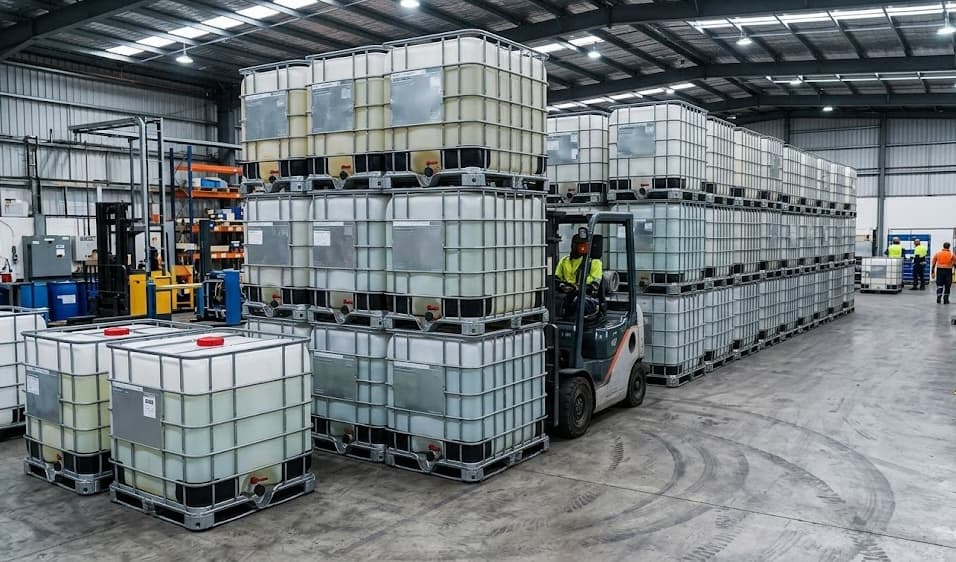
Responsible, EPA-compliant recycling that processes every component of the IBC tote. We are committed to zero landfill waste, turning end-of-life containers into valuable raw materials that re-enter the manufacturing supply chain.
Get a Free Quote
We respond within 24 hours
Responsible IBC Recycling
The Complete 8-Step IBC Recycling Process
Every IBC tote that enters our facility is processed through a comprehensive eight-stage recycling workflow. Nothing is wasted. Every component finds a second life. Each step is documented for full traceability and regulatory compliance.
Collection & Intake
IBC totes arrive at our Elk Grove Village facility via our pickup fleet or customer drop-off. Every incoming container is logged into our tracking system with details on origin, prior contents, and initial condition assessment. This chain-of-custody documentation ensures full traceability from intake through final processing.
- •Each tote receives a unique intake tracking number that follows it through every stage of processing
- •Prior contents are verified against SDS (Safety Data Sheet) records provided by the seller
- •Totes are weighed at intake to establish baseline material weight for recycling yield tracking
- •Containers with residual hazardous materials are segregated into our permitted hazmat holding area
- •Intake photos are taken for documentation and seller payout verification
- •Average intake capacity: 150-200 totes per day across our receiving bays
Inspection & Sorting
Each tote undergoes a thorough multi-point inspection. We evaluate the HDPE bottle for cracks, warping, UV degradation, and chemical staining. The steel cage is checked for structural integrity, rust, and weld failures. The pallet is assessed for load-bearing capacity. Based on this inspection, totes are sorted into three streams: recondition for reuse, rebottle with a new inner container, or full recycling.
- •Our 28-point inspection checklist covers every component: bottle walls, bottle bottom, fill cap threads, discharge outlet, valve body, valve handle, gaskets, cage vertical bars, cage horizontal rings, cage corner welds, cage lifting points, pallet top boards, pallet bottom runners, and more
- •UV degradation is assessed using a standardized color chart and wall thickness measurement at four points
- •Bottles are sniff-tested by trained inspectors who can identify residual chemical odors that indicate cleaning difficulty
- •Structural cage testing includes a load-bearing check simulating full-container weight with safety margin
- •Approximately 40-50% of incoming totes qualify for reconditioning, 20-25% for rebottling, and 25-35% for full recycling
- •Sorting decisions are documented and linked to the intake tracking number for complete audit trail
Residual Content Removal & Neutralization
Before any recycling begins, all residual contents must be safely removed and properly handled. This step is critical for both environmental compliance and the quality of downstream recycled materials. Residual chemicals that are not properly removed can contaminate entire batches of recycled material.
- •Non-hazardous residuals are drained into collection tanks and processed through our on-site wastewater treatment system
- •Hazardous residuals are manifested under RCRA Subtitle C requirements and shipped to licensed Treatment, Storage, and Disposal Facilities (TSDFs)
- •pH testing is performed on all residual liquids to determine proper neutralization and disposal pathway
- •Containers that held flammable materials undergo vapor testing before any cutting or hot-work operations
- •All residual handling generates documentation that becomes part of the tote processing record
- •Our wastewater treatment system processes up to 5,000 gallons per day through multi-stage filtration and neutralization
Disassembly & Component Separation
Totes destined for recycling are carefully disassembled into their three primary components. The HDPE bottle is separated from the steel cage, and the cage is removed from the pallet. Valves, gaskets, lids, and fittings are removed and sorted separately. This manual disassembly process ensures each material stream is clean and free of cross-contamination, which is critical for high-quality recycling output.
- •Disassembly is performed manually to ensure maximum material recovery and minimum cross-contamination
- •The bottle is cut free from the cage frame using specialized tools that prevent metal contamination of the HDPE
- •Valves and fittings are sorted by material type: HDPE, polypropylene, brass, stainless steel
- •Labels and adhesive residue are removed during disassembly to prevent contamination of the plastic recycling stream
- •Cage bolts, clamps, and fasteners are collected and recycled through the metal stream
- •Average disassembly time: 8-12 minutes per tote by experienced technicians
HDPE Bottle Processing & Granulation
The polyethylene bottles are shredded into flakes, washed to remove residual chemicals and labels, and then granulated into HDPE pellets. These pellets are sold to manufacturers who use them to produce new plastic products including drainage pipes, plastic lumber, automotive components, and new IBC tote bottles. The recycled HDPE retains excellent structural properties and can be recycled multiple times.
- •Initial shredding reduces bottles to 2-inch flakes using our industrial shredder with a throughput of 2,000 pounds per hour
- •Float-sink separation removes any non-HDPE contaminants such as label fragments, adhesive, and dirt particles
- •Hot wash at 180 degrees Fahrenheit removes residual chemicals, oils, and organic contaminants from the flake surface
- •Friction drying reduces moisture content to below 1% before granulation
- •Granulation produces uniform HDPE pellets of 3-5mm diameter suitable for injection molding and extrusion processes
- •Quality testing includes melt flow index (MFI), density, tensile strength, and color analysis to ensure pellet consistency
- •Our recycled HDPE pellets meet industry specifications for post-consumer resin (PCR) and are in high demand from manufacturers
Steel Cage Processing
Steel and aluminum cages are compressed using our industrial baler and sent to certified metal recyclers. The steel is melted down in electric arc furnaces and reformed into new steel products. Recycling steel requires 74% less energy than producing steel from virgin iron ore, making this a significant contributor to our overall environmental impact reduction.
- •Cages are inspected one final time to remove any non-metal components (plastic clips, rubber feet) before baling
- •Our hydraulic baler compresses cages into dense bales of approximately 1,500 pounds each for efficient transport
- •Aluminum cages are separated from steel cages using magnetic sorting and processed through a dedicated aluminum recycling stream
- •All metal is sent to certified downstream recyclers who hold ISO 14001 environmental management certification
- •Steel recycling diverts an average of 33 pounds of metal per tote from landfill
- •We receive and verify Certificates of Recycling from our metal recycling partners for every shipment
Pallet Recovery & Wood Recycling
Wooden pallets in good condition are repaired and returned to service, either within our own reconditioning program or sold to pallet recyclers. Pallets that cannot be repaired are chipped into wood mulch or biomass fuel. Composite and plastic pallets are recycled through their respective material streams. No pallet material goes to waste.
- •Approximately 60% of wooden pallets can be repaired and returned to service with board replacement and re-nailing
- •Repaired pallets undergo load-bearing testing to verify they meet the weight requirements for a full IBC tote (approximately 2,500 pounds when full)
- •Irreparable pallets are processed through our wood chipper to produce landscape mulch and animal bedding material
- •Heat-treated pallets (ISPM 15 certified) are prioritized for repair due to their higher value for international shipping
- •Composite pallets (plastic/wood blend) are sent to specialized recyclers equipped to handle multi-material processing
- •Plastic pallets are recycled through our HDPE processing stream or returned to pallet manufacturers for reprocessing
Documentation, Reporting & Certificate Generation
The final step in our recycling process is comprehensive documentation. Every batch of processed totes generates a complete paper trail that tracks materials from intake through final disposition. This documentation supports our zero-landfill verification, provides clients with recycling certificates, and satisfies regulatory reporting requirements.
- •Material disposition reports detail exactly how each component was processed: weight of HDPE recycled, weight of steel baled, pallets repaired vs. chipped
- •Environmental impact calculations quantify CO2 prevented, energy saved, water conserved, and landfill space preserved
- •Certificates of Recycling are generated for each client batch, suitable for EPA compliance reporting and corporate sustainability documentation
- •Chain-of-custody documentation links every tote from the original seller through our facility to the downstream recycler or resale channel
- •Annual facility-wide recycling reports are compiled and independently audited to verify our zero-landfill achievement
- •All records are maintained for a minimum of 7 years in compliance with EPA and state record-keeping requirements
Material Recovery Rates by Component
Our recycling process achieves industry-leading material recovery rates across every IBC tote component. The following table details the weight, recovery percentage, end product, and destination for each material stream.
| Component | Weight | Recovery Rate | End Product | Destination |
|---|---|---|---|---|
| HDPE Bottle | 50-60 lbs | 97% | HDPE pellets for pipe, lumber, automotive parts, new bottles | Certified plastic recyclers |
| Steel Cage | 30-38 lbs | 99% | New steel products via electric arc furnace smelting | Certified metal recyclers (ISO 14001) |
| Wooden Pallet | 30-40 lbs | 95% | Repaired pallets, landscape mulch, biomass fuel, animal bedding | Pallet repair yards, mulch producers |
| Valve Assembly | 1-3 lbs | 90% | Sorted by material (HDPE, brass, steel) for individual recycling | Material-specific recyclers |
| Gaskets & Seals | 0.2-0.5 lbs | 85% | Rubber recycling for mats, playground surfaces, infill material | Rubber recycling facilities |
| Labels & Adhesive | 0.1-0.3 lbs | 80% | Removed during wash process, paper fiber recovered where possible | Wastewater treatment, paper recycling |
| Lid & Cap | 1-2 lbs | 95% | HDPE recycling stream, same as bottle material | Certified plastic recyclers |
| Overall IBC Tote | 115-145 lbs | 96%+ | Complete material recovery across all component streams | Zero landfill verified |
Measurable Environmental Benefits
IBC tote recycling is not just the right thing to do. It delivers quantifiable environmental benefits that contribute to your company's sustainability goals and reduce your operational footprint.
Landfill Diversion
A standard 275-gallon IBC tote weighs approximately 130 pounds. Without recycling, that entire weight goes to landfill where the HDPE plastic would persist for 400+ years. Our program diverts 100% of incoming material from disposal, eliminating this permanent environmental burden.
Carbon Reduction
Recycling the HDPE, steel, and wood components of one IBC tote prevents an estimated 185 pounds of CO2 equivalent emissions compared to virgin material production and landfill decomposition. This includes avoided manufacturing emissions, transportation savings, and prevented methane generation from landfill decomposition.
Energy Savings
Recycled HDPE requires 88% less energy to process than virgin polyethylene. Recycled steel uses 74% less energy than virgin steel production. Combined, recycling a single IBC tote saves approximately 2.8 million BTUs of energy, equivalent to 22 gallons of gasoline.
Water Conservation
Virgin plastic production is extremely water-intensive. By recycling HDPE bottles rather than manufacturing new ones, we conserve an estimated 18 gallons of water per tote processed. Across our annual processing volume, this represents millions of gallons of freshwater preserved.
Recycling vs. Landfill: The Comparison
| Factor | IBC Recycling | Landfill Disposal |
|---|---|---|
| Material Recovery | 96%+ of materials recovered and reused | 0% - All materials permanently lost |
| CO2 Emissions | 185 lbs CO2 prevented per tote | 185 lbs CO2 generated from production and decomposition |
| Energy Impact | 80%+ energy savings vs. virgin production | Zero energy recovery, new production required |
| Water Impact | 18 gallons water saved per tote | Potential groundwater contamination from leachate |
| Landfill Space | Zero landfill contribution | 15+ cubic feet of landfill space consumed per tote |
| HDPE Decomposition | Material recycled into new products immediately | 400+ years to decompose, releasing microplastics |
| Compliance Risk | Full EPA/RCRA compliance documentation provided | Potential liability for improper hazmat disposal |
| Cost to You | Free pickup, plus buyback payment for reusable totes | Disposal fees of $50-$150+ per tote depending on contents |
What We Can and Cannot Recycle
We recycle a wide range of IBC totes and components. Here is a clear breakdown of what we accept and what falls outside our recycling capabilities.
What We Accept
- ✓Standard 275-gallon composite IBC totes (HDPE bottle in steel cage on pallet)
- ✓330-gallon composite IBC totes of the same construction
- ✓IBC totes that previously contained food-grade materials (juices, oils, syrups, flavors)
- ✓IBC totes that previously contained non-hazardous industrial chemicals (detergents, solvents, adhesives)
- ✓IBC totes that previously contained hazardous materials (with proper SDS documentation)
- ✓IBC totes with damaged bottles (cracked, punctured, UV-degraded, warped)
- ✓IBC totes with damaged cages (bent bars, broken welds, collapsed frames)
- ✓IBC totes with damaged or missing pallets
- ✓IBC totes with missing or damaged valves, lids, or gaskets
- ✓IBC totes with permanent staining or discoloration
- ✓IBC totes of any age, including those with expired UN/DOT certifications
- ✓Cut or sectioned IBC tote components (bottles separated from cages)
What We Cannot Accept
- ✗All-stainless-steel IBC containers (we can refer you to a stainless steel recycler)
- ✗Rigid plastic drums that are not IBC totes (55-gallon drums, etc.)
- ✗Flexible intermediate bulk containers (FIBCs / bulk bags / super sacks)
- ✗Pressurized containers, gas cylinders, or aerosol cans
- ✗Containers with unknown contents and no SDS or product information available
- ✗Radioactive material containers (requires NRC-licensed disposal)
- ✗Containers contaminated with PCBs, asbestos, or other TSCA-regulated substances
- ✗Containers with explosive residue or unexploded ordnance
Not sure if your containers qualify? Contact us with a description and we will let you know. If we cannot handle it, we will refer you to a specialist who can.
EPA, RCRA, and State Regulatory Compliance
IBC Recycling Chicago operates in full compliance with all applicable Environmental Protection Agency (EPA) regulations governing the handling, processing, and recycling of industrial containers. Our facility holds the necessary permits for storing and processing used IBC totes, including those that previously contained regulated substances.
We follow Resource Conservation and Recovery Act (RCRA) guidelines for the classification and management of residual materials. Totes that contained hazardous materials are processed under RCRA Subtitle C requirements, with proper manifesting, handling, and documentation throughout the recycling chain. Our EPA generator ID number is registered and active for hazardous waste generation incidental to container recycling operations.
Our wastewater from the cleaning process is treated through an on-site filtration and neutralization system before discharge, meeting all Clean Water Act standards and our NPDES (National Pollutant Discharge Elimination System) permit requirements. Air emissions from our plastic shredding and granulation operations comply with Clean Air Act limits through HEPA filtration and enclosed processing systems.
At the state level, we maintain full compliance with Illinois Environmental Protection Agency (IEPA) regulations governing solid waste processing facilities, including our IEPA solid waste permit, air quality operating permit, and stormwater pollution prevention plan (SWPPP). We submit all required annual reports and undergo routine IEPA inspections.
We maintain detailed records of all materials processed and recycled, providing a complete audit trail for environmental reporting purposes. Clients can request environmental compliance certificates and material disposition reports for their own sustainability documentation needs.
Hazardous Material Handling Procedures
IBC totes that previously contained hazardous materials require special handling throughout the recycling process. Our facility is permitted and equipped to safely manage these containers in full compliance with EPA and RCRA regulations.
Identification & Classification
Every incoming tote with hazmat history is classified using the SDS and EPA waste codes. We determine whether residual contents qualify as RCRA hazardous waste, and if so, which subcategory (ignitable, corrosive, reactive, toxic, or listed waste) applies.
Segregated Storage
Hazmat totes are stored in our dedicated, bermed, and covered hazardous material holding area with secondary containment, fire suppression, and spill response equipment. Storage time does not exceed 90 days per RCRA generator requirements.
Triple-Rinse Decontamination
Per EPA regulations (40 CFR 261.7), containers that held hazardous materials must be triple-rinsed before they can be managed as non-hazardous. Our triple-rinse protocol meets these standards, and rinse water is managed as hazardous waste.
Manifested Waste Disposal
Residual hazardous materials and contaminated rinse water are shipped under EPA Uniform Hazardous Waste Manifest to licensed Treatment, Storage, and Disposal Facilities (TSDFs). We retain copies of all manifests for a minimum of 3 years.
Personnel Training
All employees who handle hazardous materials complete 40-hour HAZWOPER initial training and 8-hour annual refresher courses in accordance with OSHA 29 CFR 1910.120. Additional training covers emergency response, spill containment, and fire suppression.
Emergency Preparedness
Our facility maintains a RCRA Contingency Plan with designated emergency coordinators, evacuation routes, spill response procedures, and emergency equipment locations. Local fire department and environmental authorities are notified of our hazmat operations.
Our Zero-Landfill Commitment in Detail
IBC Recycling Chicago operates under a strict zero-landfill policy. This means that 100% of the material we receive is either reconditioned for reuse or recycled into new raw materials. Nothing we process ends up in a landfill. Period.
This commitment extends to every component of the IBC tote: the HDPE bottle, the steel cage, the pallet, and all ancillary parts including valves, gaskets, labels, and adhesive residue. Even wash water is treated and recycled through our closed-loop system. Sludge from our wastewater treatment is dewatered and sent to permitted facilities for further processing, never to landfill.
Our zero-landfill achievement is independently verified through annual audits that track incoming material weight against outgoing recycled material and reconditioned products. The audit reconciles every pound of material that enters our facility with its documented destination. Our current diversion rate stands at 99.7%, with the remaining 0.3% accounted for by moisture loss during processing, not landfill disposal.
We publish our diversion rate annually and make it available to clients for their ESG and sustainability reporting. Companies that partner with us for IBC tote recycling can confidently claim zero-landfill disposal for their container waste stream.
Our zero-landfill commitment is not just a marketing claim. It is backed by documented processes, verified data, independent audits, and regulatory oversight. We invite clients and auditors to tour our facility and review our material tracking systems at any time.
Certificates and Documentation We Provide
We provide comprehensive documentation for every recycling engagement. These certificates are formatted for direct inclusion in regulatory filings, sustainability reports, and audit packages.
Certificate of Recycling
Documents the quantity, weight, and complete disposition of all totes processed. Confirms zero-landfill disposal. Accepted for EPA compliance reporting, ISO 14001 audits, and corporate sustainability disclosures.
Material Disposition Report
Detailed breakdown by component: pounds of HDPE recycled, pounds of steel baled, pallets repaired vs. chipped. Includes downstream recycler identification and their environmental certifications.
Environmental Impact Statement
Quantifies the CO2 prevented, energy saved, water conserved, and raw materials preserved through your specific recycling engagement. Ready for inclusion in sustainability reports and ESG filings.
Chain of Custody Documentation
End-to-end traceability from your facility through our processing to the downstream recycler. Includes intake records, processing logs, and downstream recycler confirmations.
Hazardous Waste Manifest Copies
For totes that contained hazardous materials, copies of the EPA Uniform Hazardous Waste Manifest documenting proper disposal of residual materials through licensed TSDFs.
Annual Recycling Summary
For recurring clients, an annual compilation report showing all totes recycled, total environmental impact, and year-over-year sustainability improvement metrics.
Downstream Partner Recyclers
We do not operate in isolation. Our recycling program relies on a network of certified downstream partners who process our separated material streams into new products. Every partner in our network is vetted for environmental compliance, quality standards, and ethical operations.
HDPE Plastic Recyclers
Our plastic recycling partners hold ISO 14001 environmental management certification and process our HDPE flakes into pellets for manufacturers of pipe, lumber, automotive components, and new container bottles. We audit these facilities annually.
ISO 14001 CertifiedSteel & Metal Recyclers
Our metal recycling partners operate EPA-permitted electric arc furnace operations that melt down our baled steel cages into new steel products. Steel recycling is one of the most energy-efficient recycling processes available.
EPA Permitted / ISRI MemberPallet Repair & Wood Recyclers
Our pallet partners repair serviceable pallets for reuse and chip damaged pallets into mulch, animal bedding, and biomass fuel. Heat-treated pallets (ISPM 15) are prioritized for repair due to their value in international shipping.
NWPCA MemberHazardous Waste TSDFs
Licensed Treatment, Storage, and Disposal Facilities that handle residual hazardous materials from our container processing. All TSDFs hold RCRA Part B permits and are inspected by EPA and state environmental agencies.
RCRA Part B PermittedWastewater Treatment Partners
For high-volume processing periods when our on-site wastewater capacity is exceeded, we work with licensed wastewater treatment facilities that accept our process water for additional treatment before discharge.
NPDES PermittedRubber & Elastomer Recyclers
Gaskets, seals, and rubber components are sent to specialized rubber recyclers who grind them into crumb rubber for use in playground surfaces, athletic tracks, rubber mats, and tire-derived fuel.
State Environmental PermitsReady to Recycle Your IBC Totes?
Whether you have a handful of totes or a warehouse full, we will handle the entire recycling process. Free pickup, transparent processing, environmental documentation, and zero-landfill guarantee included with every engagement.